Hank Devereaux’s urinary problems
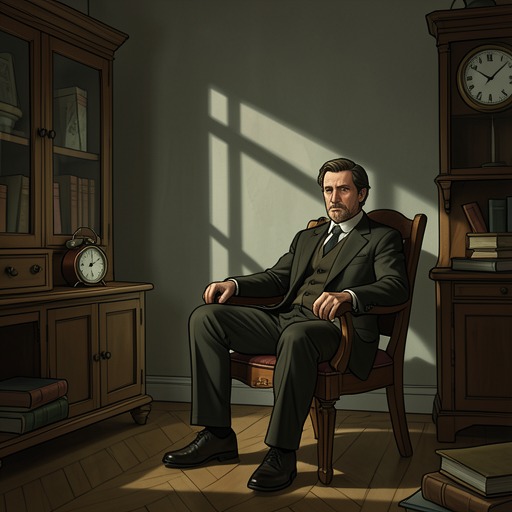
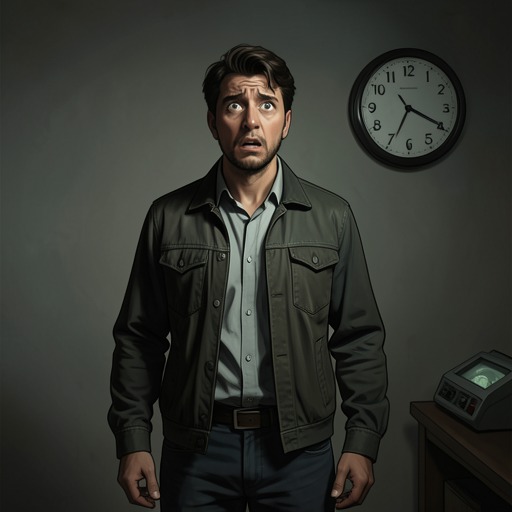
Straight ManWilliam Henry Devereaux, Jr.’s urinary problems recur as a concrete disruption of daily life and as a running source of unease. He waits for urination to begin, experiences urgency during ordinary activities, and at one point describes pain; the symptoms also recall his father’s kidney-stone episodes. Yet no diagnosis is established. The uncertainty matters: William Henry Devereaux, Jr. turns his body into evidence he cannot fully interpret, while trying to distinguish physical misfortune from moral punishment.
Symptoms and Recurring Disruption
In a men’s washroom, William Henry Devereaux, Jr. waits before a mirror while three students urinate and leave. Their brief, unselfconscious visit throws his own delay into relief. He reads the moment as part of aging, grouping the difficulty with sleeplessness, creaking bones, and inflexibility. His comparison broadens the experience beyond one inconvenient episode: he knows older men who sit awake for long periods at night, waiting to urinate, and suspects his father has endured similar vigils. Although he is still months shy of fifty, he imagines himself entering that familiar pattern.
The mirror becomes a recurring place where the problem is noticed and measured. William Henry Devereaux, Jr. returns to it after an earlier day marked by blood from a punctured nostril, contrasting that bleeding with the difficulty he now has urinating. The juxtaposition does not establish a shared medical cause. Instead, it gives him two bodily incidents to compare as he tries to make sense of a body that is no longer reliably obedient. He wonders whether the contrast is comic or tragic, but does not resolve the question; the uncertainty itself is part of the episode’s tone.
The problem also interrupts racquetball. During a game with Tony Coniglia, William Henry Devereaux, Jr. is being driven around the court, exhausted and frustrated, and ready to concede. He also needs to urinate again. The urgency is folded into the game rather than given a separate crisis scene: it competes with fatigue, pressure to keep playing, and the immediate contest. Tony wins the point and the game, while William Henry Devereaux, Jr.’s recurring need remains unresolved in the scene.
Pain, Comparison, and the Question of Cause
Later, William Henry Devereaux, Jr. describes urination as hot and painful. The discomfort prompts him to think of his father’s periodic kidney-stone problems, which he had long regarded as a kind of karmic justice for his father’s adultery. He now sees the danger in applying that moral logic to himself: merely contemplating adultery might seem to make him deserving of the same affliction. The thought is not a medical explanation, and the narrative does not say that his symptoms are kidney stones. It is William Henry Devereaux, Jr.’s attempt to interpret pain through the history of his family and his own anxieties about desire.
He resists the implication that thought and action are interchangeable. Drawing on Occam’s search for a reconciliation between faith and rational inquiry, he argues inwardly for a simpler distinction: thinking about wrongdoing is not the same as doing it. That reasoning does not make the physical symptoms disappear, nor does it settle their cause. It does, however, prevent his father’s illness from becoming a ready-made verdict on his own character. The bodily echo remains unsettling without proving a moral connection.
The Body in Company
The episodes repeatedly place private difficulty beside other people’s ease. In the washroom, the students finish quickly while William Henry Devereaux, Jr. waits. At another moment, a man named Dave joins him and asks whether he is trying to pass a stone. Dave’s question introduces kidney stones as a possibility in the conversation, but it is a question, not a diagnosis. The exchange makes William Henry Devereaux, Jr.’s difficulty visible to someone else and brings the condition he has associated with his father into the present encounter.
A contrasting image appears when William Henry Devereaux, Jr. hears another man urinate with force. The contrast sharpens his awareness of what he cannot do easily, without providing medical information or a remedy. His attention to other men’s ordinary bodily functions recurs alongside the mirror scenes: the body is not only a private source of discomfort but something he evaluates by comparison, even when no one else can know precisely what that comparison costs him.
Temporary Relief and Narrative Significance
In a hot tub with Tony Coniglia and Missy Blaylock, the pressure in William Henry Devereaux, Jr.’s urinary tract eases. The relief is situational and temporary; the account offers no indication that the underlying problem has been diagnosed or resolved. He has agreed to stay for one beer, and sleet falls while the group sits in the water. The scene sets bodily comfort against the surrounding inconvenience, but does not turn that comfort into a cure.
Across these episodes, the problem moves between interruption, observation, and interpretation. Waiting in a washroom, needing to urinate during a game, enduring pain, hearing another man’s effortless stream, and finding relief in warm water are distinct circumstances rather than a single dramatic medical event. Together they make aging and bodily uncertainty present in the texture of William Henry Devereaux, Jr.’s days. Their comic potential never cancels the discomfort: he can recognize the absurdity of comparing blood and urine, yet still face a body whose timing and response he cannot command. The recurring symptoms also draw a careful line between inheritance and judgment. His father’s kidney stones shape the way he understands his own predicament, but the evidence leaves the cause open and allows William Henry Devereaux, Jr. to reject the notion that a thought alone makes him guilty.